See Exactly Where Your RIS Go-Live Stands
Rafael De Leon shows how Project Hub brings transparency, automation, and consistency to every CareFlow go-live.
Jump to a chapter19 chapters
What you’ll learn in this episode
In this conversation, Rafael shares:
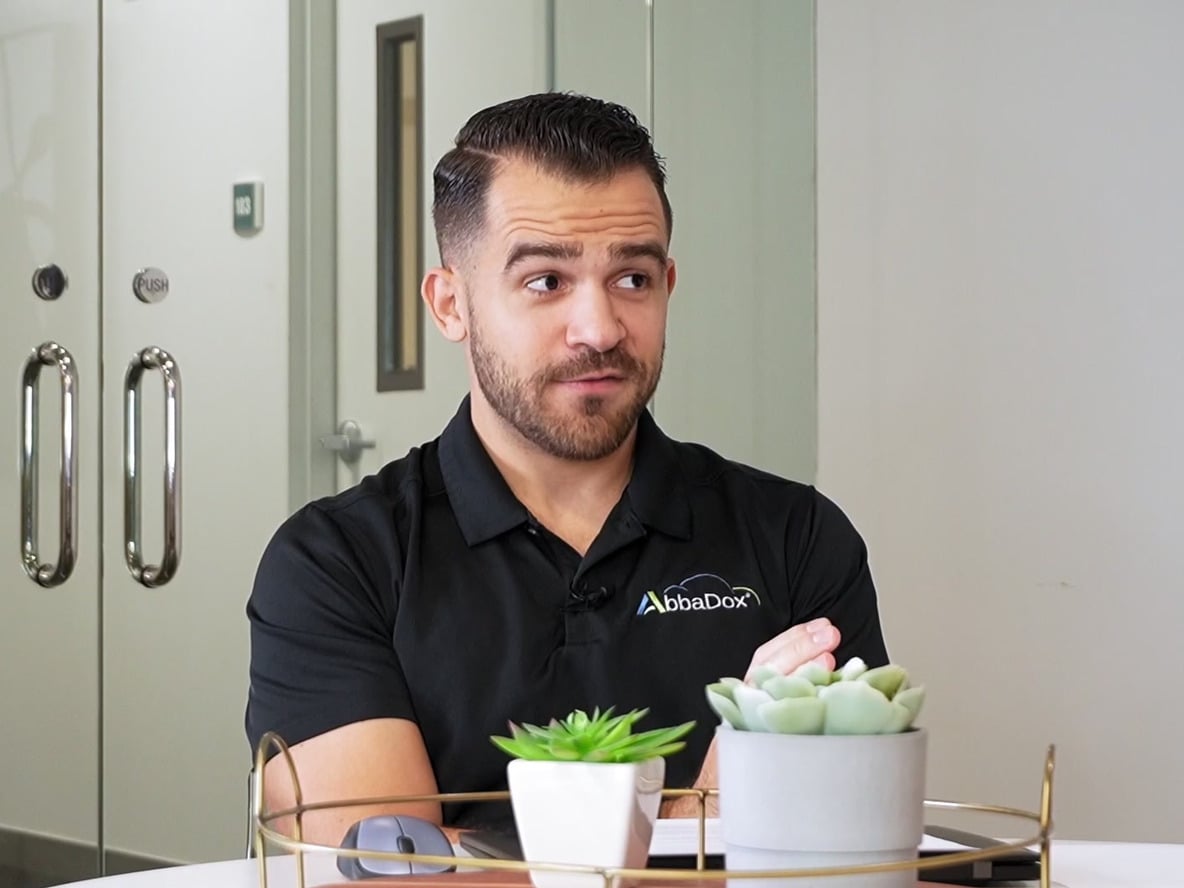
See how it comes together
Rafael De Leon walks through the full conversation.
The Challenge: Onboarding That Leaves Clients in the Dark
As Rafael De Leon explains, three signs tell you an onboarding is failing: a lack of transparency, inefficiency in the tasks being worked, and poor communication.
When a client has to ask where the project stands, that is a red flag, because they should never feel in the dark.
Historically, implementation ran on gut feel and a basic Excel sheet, with no step-by-step process, making it hard to be consistent or to bring new people onto complex projects.

The Solution: Project Hub
In this episode of Keeping Up With AbbaDox, Director of Implementation Rafael De Leon joins host Pierre-Antoine Tricen for a live look at Project Hub, a centralized platform that controls a deployment from handoff to go-live for both AbbaDox and the client.
It automates communication by email and text, sends weekly status emails to stakeholders, and makes every implementation consistent and continuously improvable.

Over communicating is better than not communicating enough.
Director of Implementation at AbbaDox.
“We want to make sure that the customers don’t feel in the dark.”
Rafa names lack of transparency as the first way onboarding fails. Project Hub answers it structurally: every task carries its own instructions, assignments trigger their own alerts, and each completed task logs estimated versus actual hours so the bottleneck is visible rather than guessed at. The all-CareFlow template has grown from about 155 tasks to roughly 190, not more work, more detail.
How Project Hub Runs a Deployment
Rafael walks through how the tool mitigates the three failure signs.