Radiology Systems

Radiology Informatics, Explained

The academic definitions are abundant. The operational translation is not: what the term actually covers, and which parts of it an imaging center actually buys.

The short answer

Radiology informatics is the discipline of managing imaging data and the systems that carry it: acquisition, storage, retrieval, reporting, exchange and analysis. In practice it covers the PACS, the RIS, the standards they speak, and increasingly the AI applied to both the images and the operation around them.
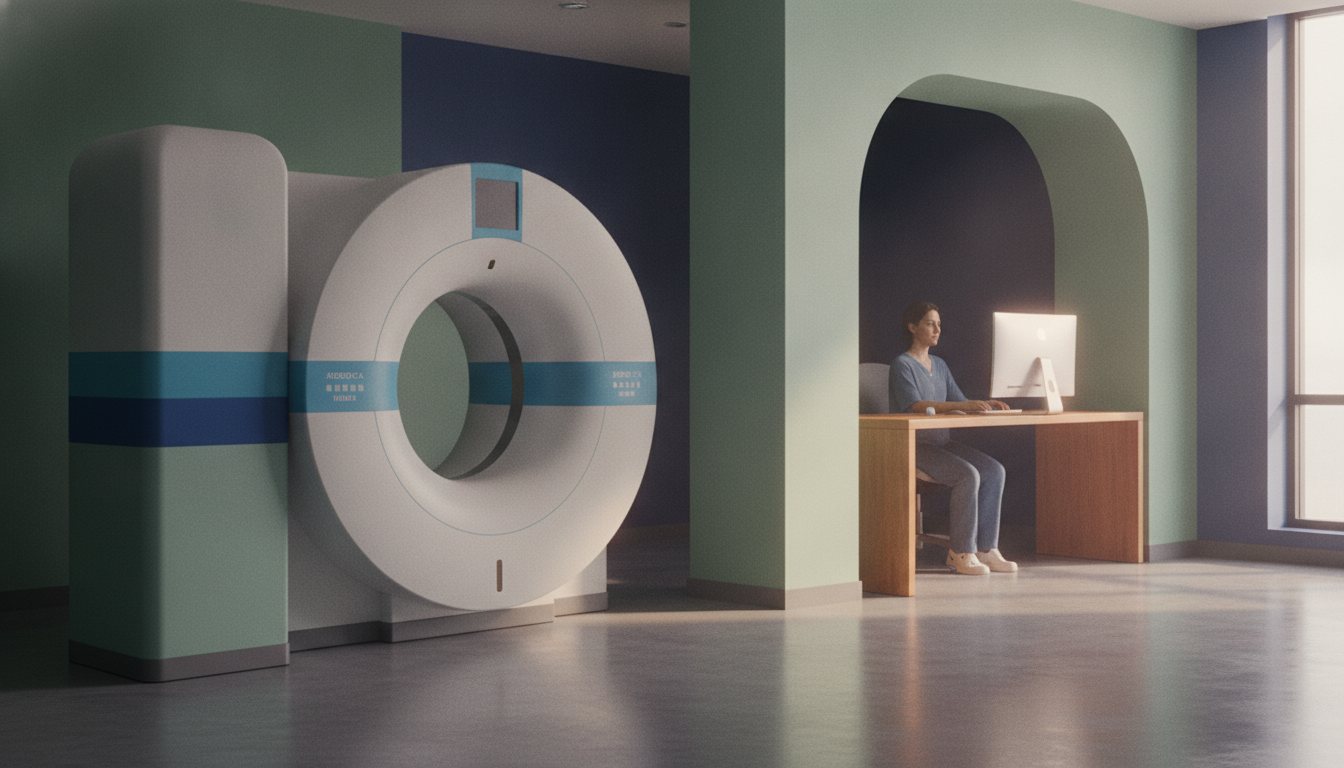
An imaging center interior showing a scanner room and a workstation alcove in one view
Key takeaways
  • Informatics is a discipline, not a product. Nobody sells you "informatics".

  • In practice it means the systems and the standards: PACS, RIS, DICOM, HL7 and FHIR.

  • The operational half is underrated. Most informatics attention goes to images; most wasted time is in the workflow around them.

What radiology informatics actually covers

Imaging informatics, radiology informatics and medical imaging informatics are used interchangeably. All describe the same territory: how imaging data is created, stored, moved, read, reported and reused.

Concretely that means:

  • Acquisition and standards. DICOM, and how studies are labeled at the source.

  • Storage and lifecycle. Archives, tiering, retention and vendor neutral archives.

  • Workflow. Worklists, scheduling, reporting and results distribution, which is where the RIS lives.

  • Exchange. HL7 and FHIR, image sharing between organizations.

  • Analysis. Operational analytics, and AI applied to both images and workflow.

Which half of radiology informatics does nobody teach?

Informatics teaching leans heavily on the image: formats, compression, viewers, algorithms. That is the interesting half.

The half that consumes an imaging center's actual day is the operational one. Did the order arrive cleanly? Was the patient selected from the worklist? Did the report get back to the person who ordered it? We can say that with some confidence because that is the half we build, and it is where the money and the frustration both sit.

If you are entering this field, learning HL7 message structure and how a worklist actually behaves will make you useful faster than another viewer comparison.

Where does informatics sit in the imaging chain?

A useful way to see the field is to follow one study and ask what informatics is responsible for at each step. It is not a layer on top of imaging. It is the connective work between every stage.

What informatics owns at each stage
Comparison
StageThe informatics questionWhere it lives
Orderingis the right study requested, with the clinical question attached?RIS, EHR, HL7 or FHIR ordering
Schedulingdoes the modality know what is coming, and for whom?RIS, DICOM modality worklist
Acquisitionis the study labeled correctly at the source?modality, MPPS
Storageis it retrievable, at diagnostic quality, for as long as required?PACS, VNA, retention policy
Retrievaldo the priors arrive with the current study?patient identity, prefetch
Interpretationdoes the radiologist have the context to read it?worklist, viewer, prior reports
Reportingis the finding captured as data, not only as prose?structured reporting
Communicationdoes the result reach the person who ordered it, in time?results distribution, portals
Analysiscan you answer a question about the operation without an export?analytics, registries

The pattern worth noticing: almost none of these are picture problems. They are identity, timing and handoff problems. That is why the field is called informatics and not imaging.

What does the professional certification actually cover?

Imaging informatics has a formal credential, which is unusual for a field this young and useful to know about if you are considering it as a career.

The Certified Imaging Informatics Professional (CIIP) is administered by the American Board of Imaging Informatics, which SIIM records as "established in 2007 in partnership with the American Registry of Radiologic Technologists (ARRT)". The Society for Imaging Informatics in Medicine is the professional body around it, and runs the preparation courses.

For radiologists rather than technologists or administrators, clinical informatics is a recognized board-certified subspecialty, which is a different and longer route to a related place.

What that tells you about the field: it is broad enough, and consequential enough, that somebody thought it needed certifying. It also sits at the join of three things, information science, computing and clinical practice, rather than inside any one of them.

Answers

Frequently asked questions

What is radiology informatics?

The discipline of managing imaging data and the systems that carry it, from acquisition through storage, reporting and exchange.

Is imaging informatics the same as radiology informatics?

In practice yes. Imaging informatics is sometimes used more broadly to cover other specialties producing images.

What does an imaging informatics professional do?

Runs and integrates the systems: PACS, RIS, interfaces, standards, and increasingly AI deployment and data governance.

How do you get into imaging informatics?

The recognized credential is the Certified Imaging Informatics Professional, administered by the American Board of Imaging Informatics, which SIIM records as established in 2007 with the ARRT. For radiologists, clinical informatics is a board-certified subspecialty and a longer route.

What is CIIP certification?

Certified Imaging Informatics Professional: the formal credential for people who run imaging systems rather than read the images.

What standards matter most?

DICOM for images, HL7 and FHIR for messages about patients, orders and results.

Is it a good career?

Demand follows imaging volume, and imaging volume keeps rising. The scarce skill is people who understand both the clinical workflow and the interfaces.

See it on your own worklists.

Bring your own numbers and we will walk through them with you.